Got a Fine Aged Wine? How to Open Wine the Right Way with Speak Easy Magazine Australia
An exceptional evening with a fine aged wine can sometimes be marred by the challenge of an old, crumbly cork. To ensure your night remains memorable for all the right reasons, it’s vital to approach the opening of your wine with care. Let’s look into the best practices for uncorking your wine, ensuring the experience is as refined as the drink itself.
Preparation Before Uncorking: How to Open Wine
It’s crucial to position the wine bottle upright at least 24 hours before you plan to open it. This allows any sediment formed by the natural settling of tannins and anthocyanin—which enhance the wine’s structure and colour—to accumulate at the bottom of the bottle. This sediment doesn’t degrade the wine’s quality; rather, it’s a sign of proper aging. Typically, bottles are stored on their side to keep the cork moist and prevent drying, but standing the bottle upright in a cool, dark place before serving helps avoid any unpleasant gritty surprises.
Choosing the Right Tool for the Job:
When it comes time to open wine, the tool you choose is dependent on the age and condition of the cork. For modern vintages—those 20 years old or younger—a traditional waiter’s friend corkscrew will do. However, for older wines or if the cork looks compromised, consider using an ah-so, a two-pronged device that extracts the cork without further crumbling it. This method is particularly effective for delicate corks and can prevent cork bits from contaminating your wine.
Handling a Crumbled Cork
If the cork falls apart despite your precautions, don’t worry—the wine is still salvageable. Simply filter the wine through a fine mesh like cheesecloth or a sieve to remove any cork debris. This step ensures that your wine remains enjoyable and presentable.
To Decant or Not to Decant
Decanting is another consideration when preparing your wine. This process can enhance the wine’s flavour by exposing it to more oxygen, which is beneficial for younger wines but might be detrimental for older, naturally matured ones due to the risk of over-aeration. For sturdy wines like Bordeaux and Shiraz, decanting is usually beneficial. However, with delicate wines like Burgundy, it’s better to be cautious. If you do decant, using a clear glass decanter can help you monitor and remove any sediment more effectively than pouring directly from a dark bottle.
By following these guidelines, you ensure that opening and enjoying your aged wine is a seamless and delightful experience.
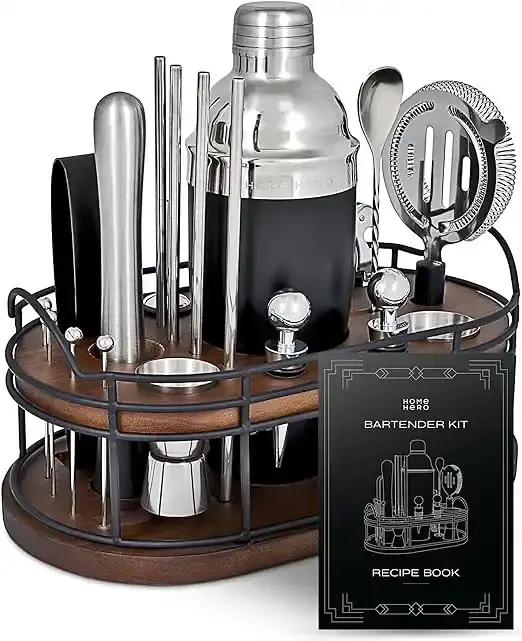
Also, be sure to explore the 22-piece ultimate bartender kit.